 EN▾











Marapu: Sumba's ancestral religion explained
What Marapu is, how it shapes Sumbanese houses, tombs, funerals and the Pasola, and how visitors can show respect.
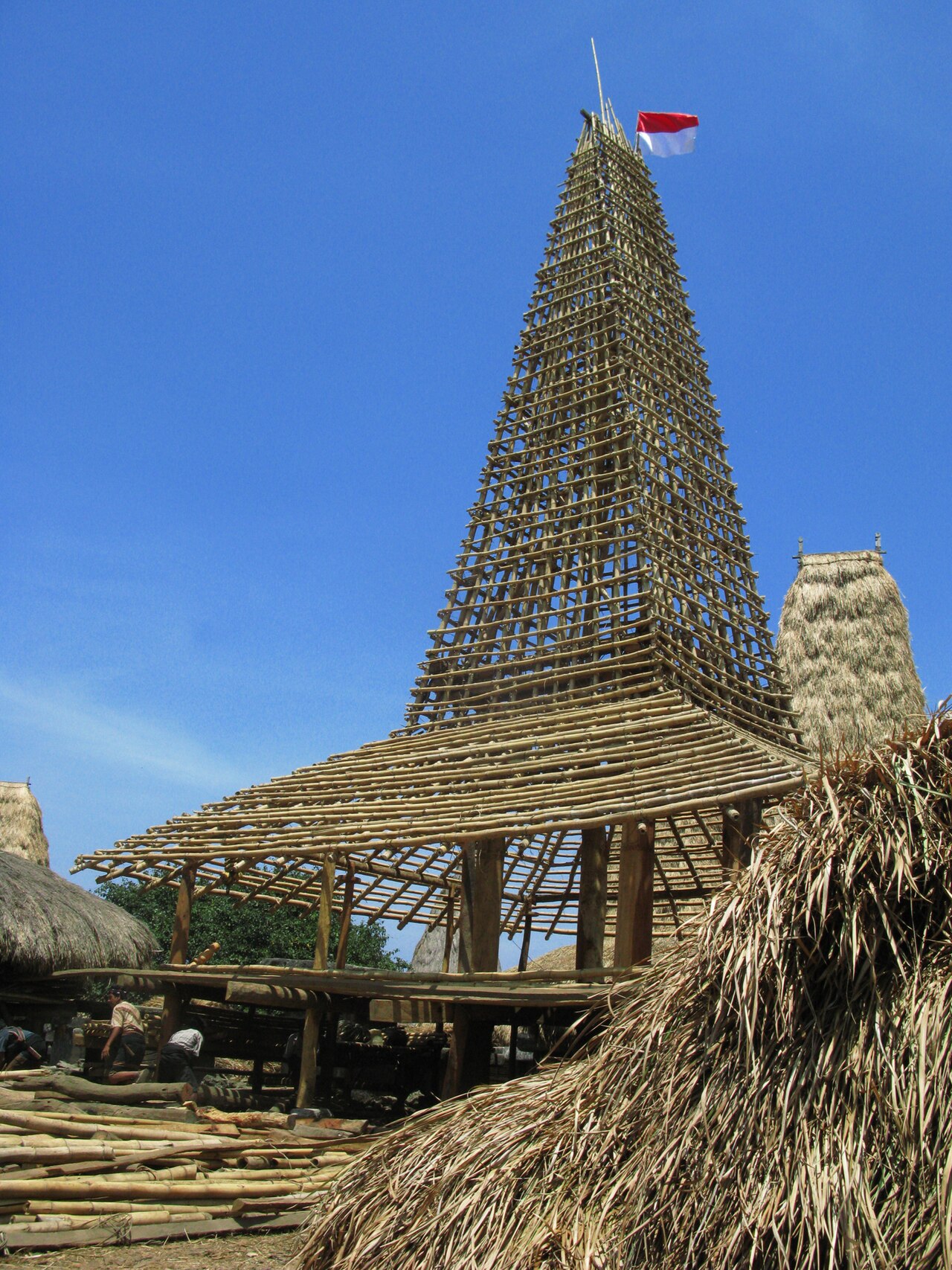

To understand Sumba you need to understand Marapu. It is the island's ancestral belief system, and it explains why the houses look the way they do, why huge stones are dragged across the island and why the Pasola exists.
The basics
Marapu is the belief that the spirits of ancestors watch over the living and act as intermediaries with a supreme creator. Keeping a good relationship with them through rituals, offerings and respect for custom (adat) brings harmony, good harvests and health. Ritual specialists, often called rato, lead the ceremonies.
The house as a sacred map
A traditional Sumbanese house has three levels. Animals live below, people in the middle and the tall roof is reserved for the ancestors, heirlooms and sacred objects. That is why the roofs of villages like Ratenggaro and Wainyapu rise so high.
Stone tombs and funerals
The dead are buried in stone tombs in the village square, close to the living. Dragging a large slab can involve hundreds of people and long ceremonies, and funerals can last for days, with buffalo and pigs sacrificed. The horns and jaws you see on houses are records of these events. Some of the largest tombs are in Anakalang, at Pasunga and Gallubakul.
The Pasola
The Pasola, a ritual contest on horseback in western Sumba, belongs to the Marapu calendar and is linked to the arrival of sea worms (nyale) on the shore. Read our Pasola guide.
How to show respect
- Never touch, sit on or climb stone tombs or sacred objects.
- Ask before entering a house or photographing ceremonies.
- Accept betel nut (sirih pinang) if offered, even if you only hold it; it is a sign of welcome.
- Follow your guide's lead at funerals and rituals.
Marapu in daily life
Marapu shapes the layout of villages, the form of the houses, the stone tombs and the calendar of rituals, including the Pasola. Many Sumbanese are Christian and also follow Marapu customs. See traditional houses, megalithic tombs and horses in Sumba.
As a visitor
Be respectful at ceremonies, ask before taking photos and follow your guide. Read village etiquette.
📍 Places in this guide at a glance
| Place | Region | Type | Nearest airport |
|---|---|---|---|
| Ratenggaro Village | Southwest Sumba | 🛖 Villages | ✈ TMC · 36 km · 1 h 30 min |
| Wainyapu Village | Southwest Sumba | 🛖 Villages | ✈ TMC · 36 km · 1 h 30 min |
| Pasunga Village | Central Sumba | 🛖 Villages | ✈ TMC · 41 km · 1 h 45 min |
| Gallubakul stone tomb | Central Sumba | 🐎 Culture | ✈ TMC · 42 km · 1 h 45 min |
FAQ
What does Marapu mean?
Marapu refers to the ancestral spirits and, by extension, to the traditional belief system of Sumba built around honouring them.
Is Marapu still practised?
Yes. Many Sumbanese are Christian, but Marapu traditions remain important across the island, and some communities follow Marapu as their main belief.
Guides

Hiring a driver in Sumba: how it works and what to agree
How to hire a car with driver in Sumba: where to find one, what is usually included, questions to ask, scooter vs car, and tips for a smooth trip.
Sumba travel guide: everything you need to plan your trip
The complete guide to Sumba, Indonesia: when to go, how to get there from Bali, the four regions, what to see, costs, safety, etiquette and itineraries.
25 best things to do in Sumba
From Weekuri Lagoon to the Pasola, the dancing trees of Walakiri and the megalithic tombs of Anakalang: the best experiences on Sumba island, with a map.
The best beaches in Sumba (with map)
Every beach worth the drive on Sumba: lagoons, surf breaks, sunset spots and empty white sand on all four coasts, with tips on safety and access.
How to get from Bali to Sumba: flights, ferries and airports
Flights from Bali to Tambolaka (TMC) and Waingapu (WGP), which airport to choose, baggage limits, ferries and how to get from the airport to your hotel.
Getting around Sumba: drivers, scooters, roads and maps
How to travel around Sumba: hiring a car with driver, renting a scooter, road conditions, fuel, mobile signal and offline maps.