 EN▾










Sumba's national parks and endemic birds: Manupeu Tanah Daru and Laiwangi Wanggameti
A guide to Sumba's two national parks, known together as Matalawa: forests, waterfalls, the Sumba hornbill and other birds found nowhere else, and how to visit responsibly.
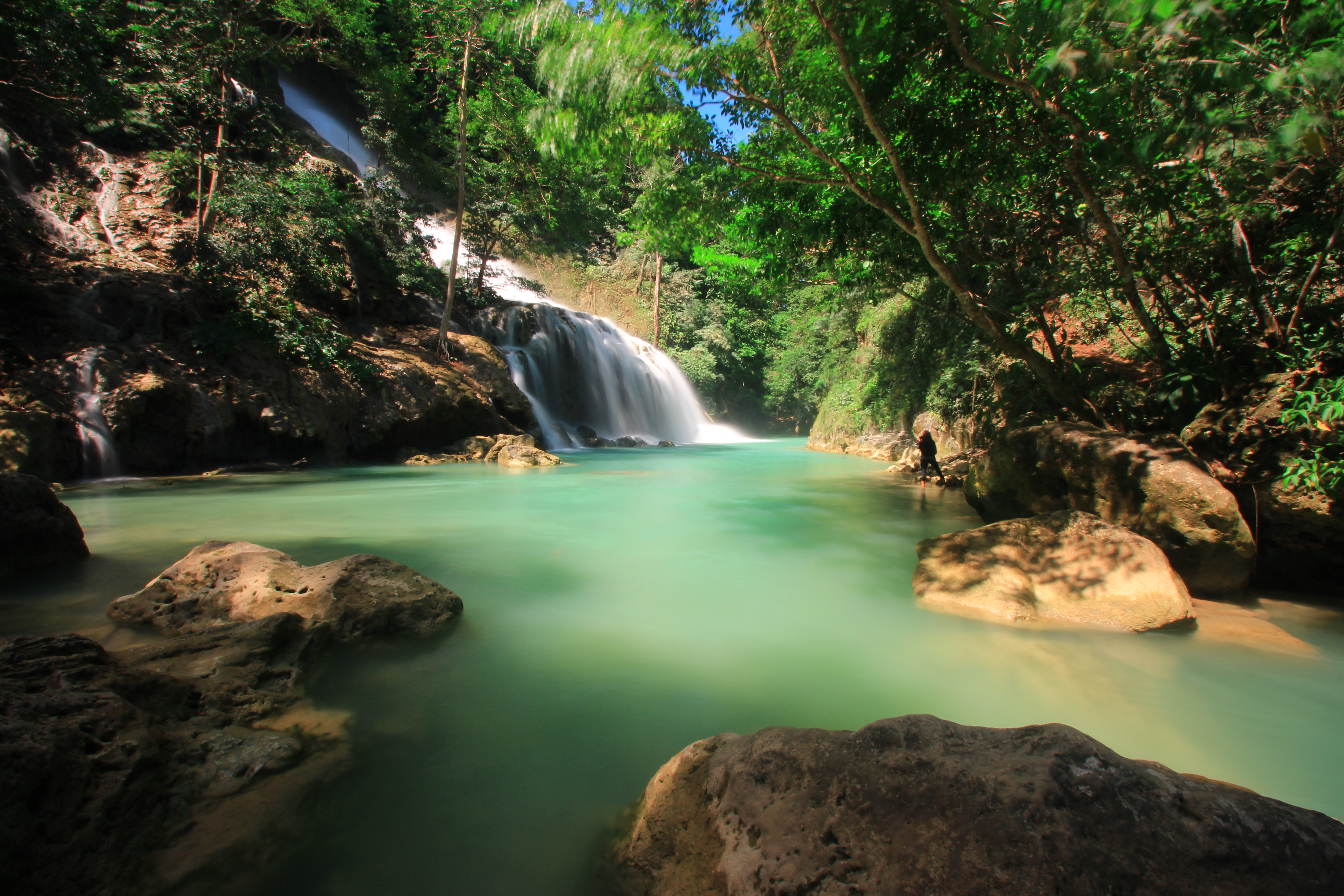

Most visitors come to Sumba for beaches and villages, but the island also has two national parks and a list of birds that live nowhere else on Earth. The forests along the southern hills hide waterfalls such as Lapopu and Matayangu, and they are the last strongholds of the Sumba hornbill.
Two parks, one name#
Sumba's two national parks, Manupeu Tanah Daru in the west and centre and Laiwangi Wanggameti in the east, were both designated in 1998 to protect endangered species. Today they are managed together and are often referred to as Matalawa. Manupeu Tanah Daru consists of lowland forest on steep slopes rising to about 600 m. Laiwangi Wanggameti includes Mount Wanggameti, the highest point in the area.
Birds found nowhere else#
For a small island, Sumba has a remarkable number of endemic birds. They include four vulnerable species, the secretive Sumba boobook (an owl), the Sumba buttonquail, the red-naped fruit-dove and the Sumba hornbill, plus the more common Sumba green pigeon, Sumba flycatcher and apricot-breasted sunbird.
The Sumba hornbill
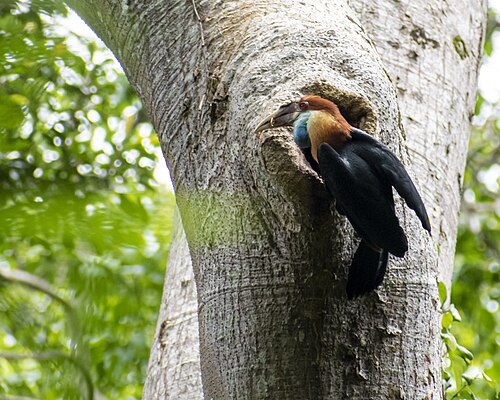
Known locally as julang, the Sumba hornbill is a large bird found only on Sumba, living in semi-evergreen forest up to about 950 m. Its numbers have fallen as forest has been cleared, and the national parks protect some of its most important habitat. Hornbills spread seeds through the forest, so protecting them helps the forest itself.
Visiting the parks#
- Waterfalls: the easiest way to experience the forest is a visit to Lapopu or Matayangu in Manupeu Tanah Daru. Check our pages for access notes.
- Birdwatching: go early in the morning with a local guide who knows where fruiting trees are. Bring binoculars and patience.
- Wanggameti: the forests of the east are remote; plan a full day or an overnight from Waingapu, see Wanggameti.
- Permits and fees: rules can change; ask at the park offices or your guide before visiting, and before flying a drone in a national park.
Respect the forest#
- Stay on paths, take your rubbish with you and do not feed or disturb animals.
- Do not buy birds or animal products.
- Hire local guides: it supports communities that live around the parks.
Plan your visit with the interactive map, and read Sumba waterfalls for practical tips.
📍 Places in this guide at a glance
| Place | Region | Type | Nearest airport |
|---|---|---|---|
| Lapopu Waterfall | Central Sumba | 💧 Waterfalls | ✈ TMC · 40 km · 1 h 45 min |
| Matayangu Waterfall | Central Sumba | 💧 Waterfalls | ✈ TMC · 41 km · 1 h 45 min |
| Wanggameti | East Sumba | ⛰️ Viewpoints | ✈ WGP · 50 km · 2 h |
FAQ
How many national parks does Sumba have?
Two: Manupeu Tanah Daru and Laiwangi Wanggameti, both designated in 1998. They are managed together and often called Matalawa.
What birds are endemic to Sumba?
Sumba has several birds found nowhere else, including the Sumba hornbill, Sumba boobook, Sumba buttonquail, red-naped fruit-dove, Sumba green pigeon, Sumba flycatcher and apricot-breasted sunbird.
Can I see the Sumba hornbill?
It is possible in the forests of the national parks with a local guide, especially early in the morning. The species is uncommon and declining, so sightings are never guaranteed.
Guides
Hiring a driver in Sumba: how it works and what to agree
How to hire a car with driver in Sumba: where to find one, what is usually included, questions to ask, scooter vs car, and tips for a smooth trip.
Sumba on a budget: backpacking tips that really work
How to travel Sumba with little money: where to base yourself, sharing transport, local food and free places worth visiting.
Sumba travel guide: everything you need to plan your trip
The complete guide to Sumba, Indonesia: when to go, how to get there from Bali, the four regions, what to see, costs, safety, etiquette and itineraries.
50 best things to do in Sumba
From Weekuri Lagoon to the Pasola, the dancing trees of Walakiri and the megalithic tombs of Anakalang: the best experiences on Sumba island, with a map.
The best beaches in Sumba (with map)
Every beach worth the drive on Sumba: lagoons, surf breaks, sunset spots and empty white sand on all four coasts, with tips on safety and access.
How to get from Bali to Sumba: flights, ferries and airports
Flights from Bali to Tambolaka (TMC) and Waingapu (WGP), which airport to choose, baggage limits, ferries and how to get from the airport to your hotel.