 EN▾


Sumba ikat motifs and what they mean
A visual guide to the common motifs on Sumba ikat: horses, crocodiles, prawns, cockatoos, mamuli, the skull tree and more, and how to read a cloth.

A Sumba ikat cloth, especially the large hinggi of East Sumba, is a story told in symbols. Once you know the main motifs, every cloth you see in a village or market becomes easier to read. For how the cloth is made, see ikat weaving in Sumba.
Common motifs#
- Horse. Wealth, status and courage; horses are central to Sumbanese life. See horses.
- Crocodile. Often linked with royalty and power, and with ancestors.
- Prawn or lobster. Because it sheds its shell, it is widely read as a symbol of renewal and life after death.
- Cockatoo and other birds. Birds can stand for messengers, wisdom or the people of a region; the cockatoo is native to Sumba.
- Mamuli. The gold ornament, a symbol of fertility; see mamuli.
- Skull tree (andung). A tree hung with skulls, recalling the warfare and headhunting of the past and the power of a victorious clan.
- Deer, roosters, turtles and fish. Animals of the island, with meanings that vary by family and village.
- Lions and crowns. Borrowed from Dutch coats of arms and coins during the colonial era and turned into Sumbanese designs.
Colours#
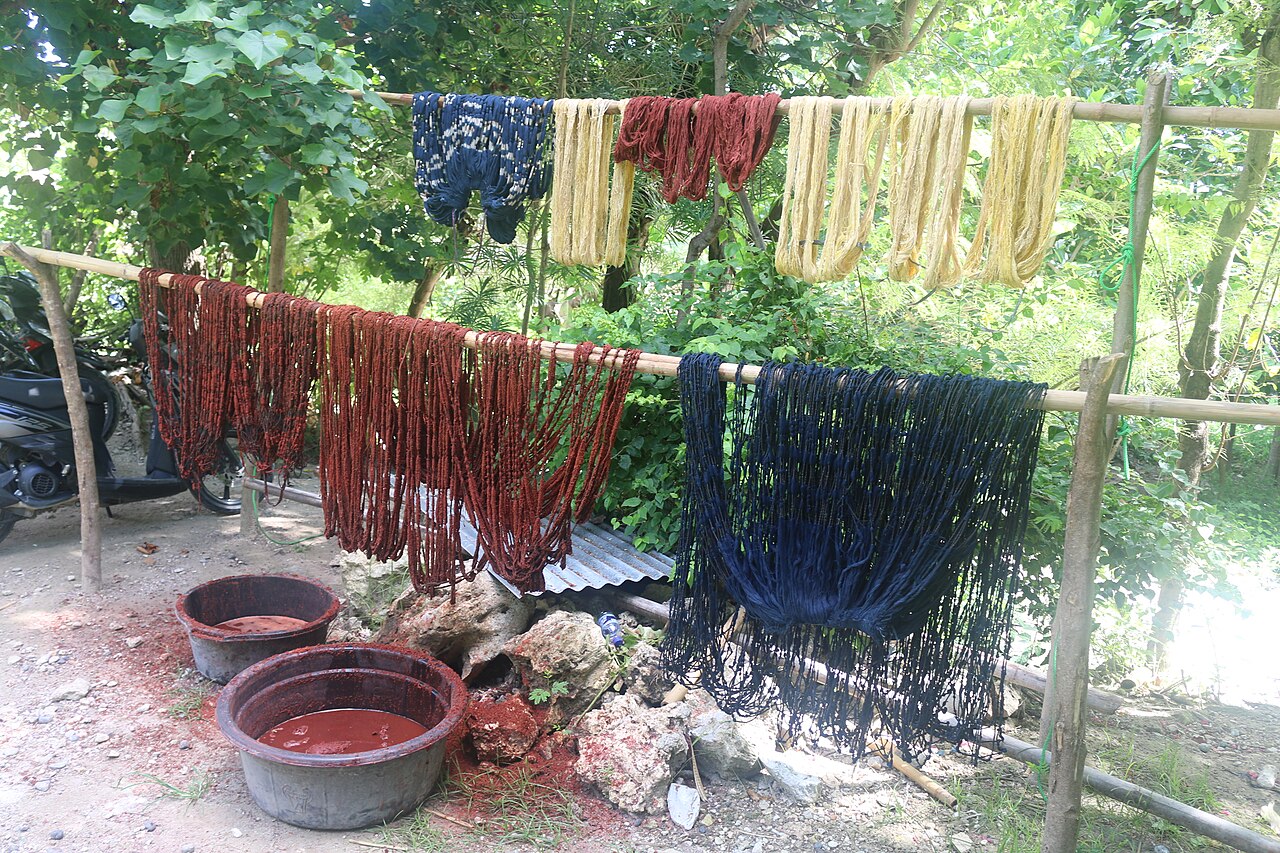
Traditional cloths use natural dyes: blue from indigo and red-brown from the roots of the morinda (mengkudu) tree, with undyed thread for white and cream. Deep, even colours take many dye baths over weeks or months. Bright cloths are usually made with chemical dyes, which is fine as long as the seller is honest about it.
Reading a cloth#
- East Sumba hinggi are usually arranged in horizontal bands, with motifs mirrored around the centre.
- West Sumba cloths tend to use more geometric patterns.
- Ask the weaver: the meaning of a motif can be particular to their family.
Where to see weaving: ikat weaving villages.
FAQ
What does the horse mean on Sumba ikat?
Wealth, status and courage. Horses are central to Sumbanese life and ceremonies.
What does the prawn motif mean?
It is commonly read as renewal or life after death, because the prawn sheds its shell.
🛖 Culture
 Sumba ikat: how it is made and how to buy it wellThe island's famous hand-woven textiles, and how to support the weavers.Sumba ikat: how the island's famous textiles are made and where to see themHinggi and lau cloths, natural dyes, motifs and meaning, and how to buy Sumba ikat fairly from the weavers.
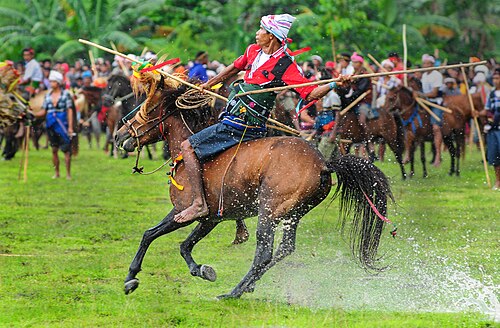 Pasola: Sumba's horseback spear ritualWhat the Pasola is, where it happens and how to watch it respectfully.
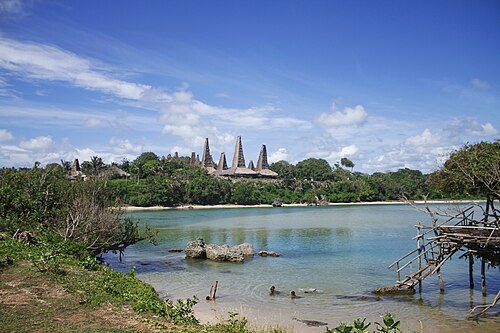 Traditional villages in Sumba: which to visit and howRatenggaro, Wainyapu, Tarung, Pasunga, Prailiu, Rende and more: what to see in Sumba's megalithic villages and how to visit respectfully.
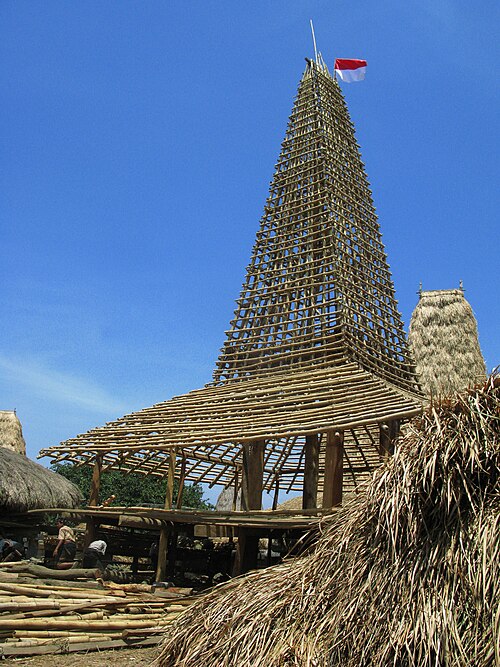 Marapu: Sumba's ancestral religion explainedWhat Marapu is, how it shapes Sumbanese houses, tombs, funerals and the Pasola, and how visitors can show respect.
 What to eat in Sumba: food, coffee and where to find itFresh fish, smoked meat, local vegetables, Sumba coffee and the betel-nut ritual: what you will eat on the island and practical tips.